Softness is a side effect of survival.
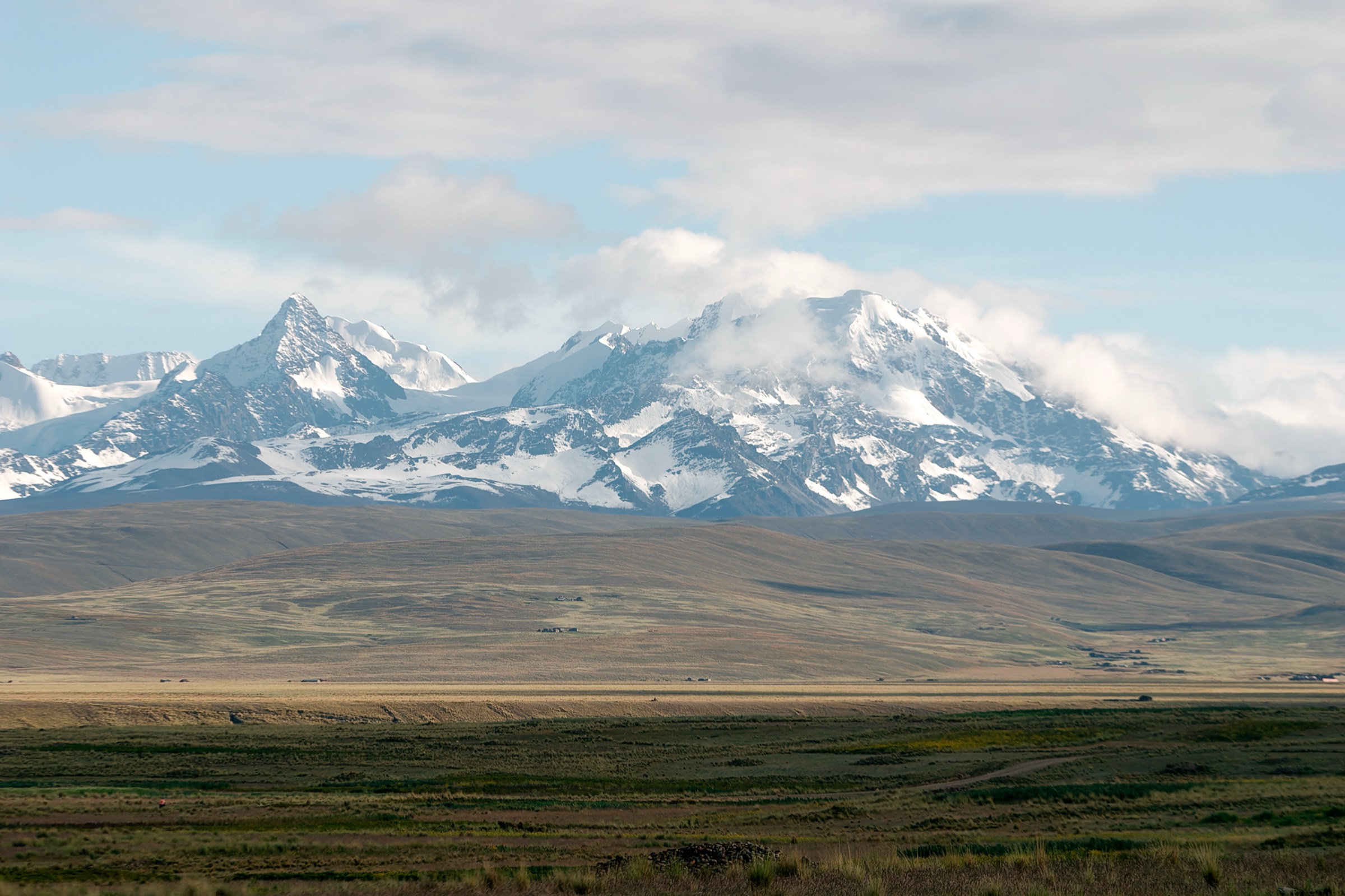
Junimata does not begin in a design studio. It begins on a plain where the air holds a third less oxygen, the sun burns through thin atmosphere, and the temperature falls below zero every night of the year.
Nothing survives that by accident. The fibers that come from here were not bred for softness. They were selected by the environment, over centuries, for the only thing that mattered: staying alive.
What makes the altitude hostile is exactly what makes the fiber worth having.
At this altitude the temperature swings more than twenty degrees between noon and midnight. A fiber that cannot insulate does not last a winter.
Above four thousand meters the atmosphere thins. Everything that lives here grows slowly, and slow growth is what makes a fiber fine and even.
The high plain is empty. Nothing contaminates the fleece before it is collected. The purity is a consequence of the geography, not of a process.
Junimata is not a design brand and it is not a marketing brand. What a retailer sells here is a fiber that spent its entire formation surviving conditions no synthetic can reproduce.
Everything worth paying for, the insulation, the resilience, the way a piece lasts a decade instead of a season, was already in the material before anyone touched it. We select it and we make it. We do not invent its performance.
A fiber formed under twenty-degree daily swings and frost every night of the year does not wear out in a bedroom. Longevity here is not a finish. It is what the material already survived.
Fineness, thermal regulation and strength were selected by the altitude over centuries. No process in a factory can add them to a fiber that never had them.
Textiles made from this material stay in the home. For a retailer that means fewer returns, fewer complaints, and a customer who comes back for the next category instead of the same one.
At 4,100 meters, nature develops fibers with exceptional resilience and insulation. Inside the home, these same properties become comfort.
Junimata — 4100 M