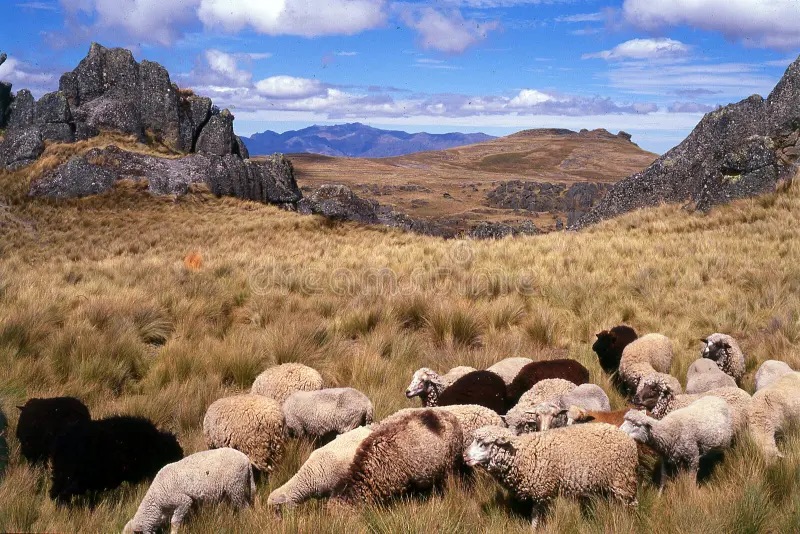
Density is what altitude leaves behind.
Wool from the Peruvian highlands is denser than wool from the lowlands. The animal that grows it faces colder nights, thinner air and a shorter season.
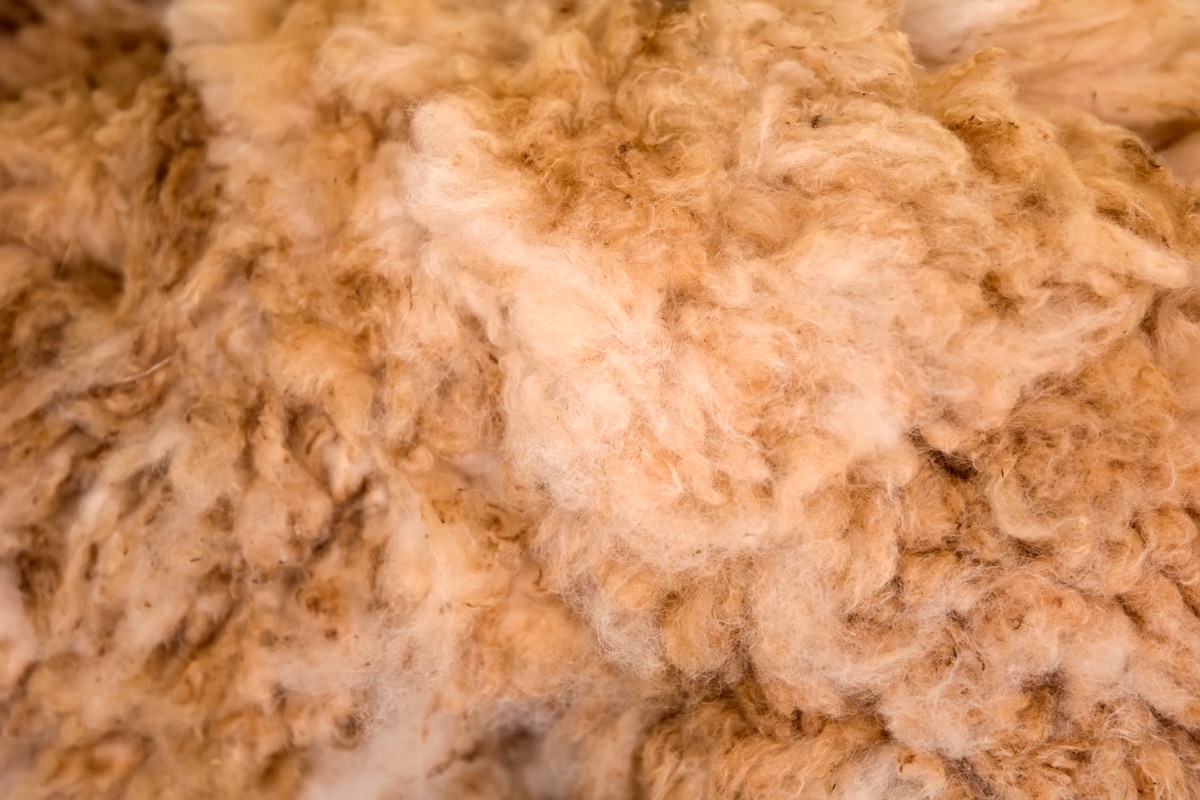
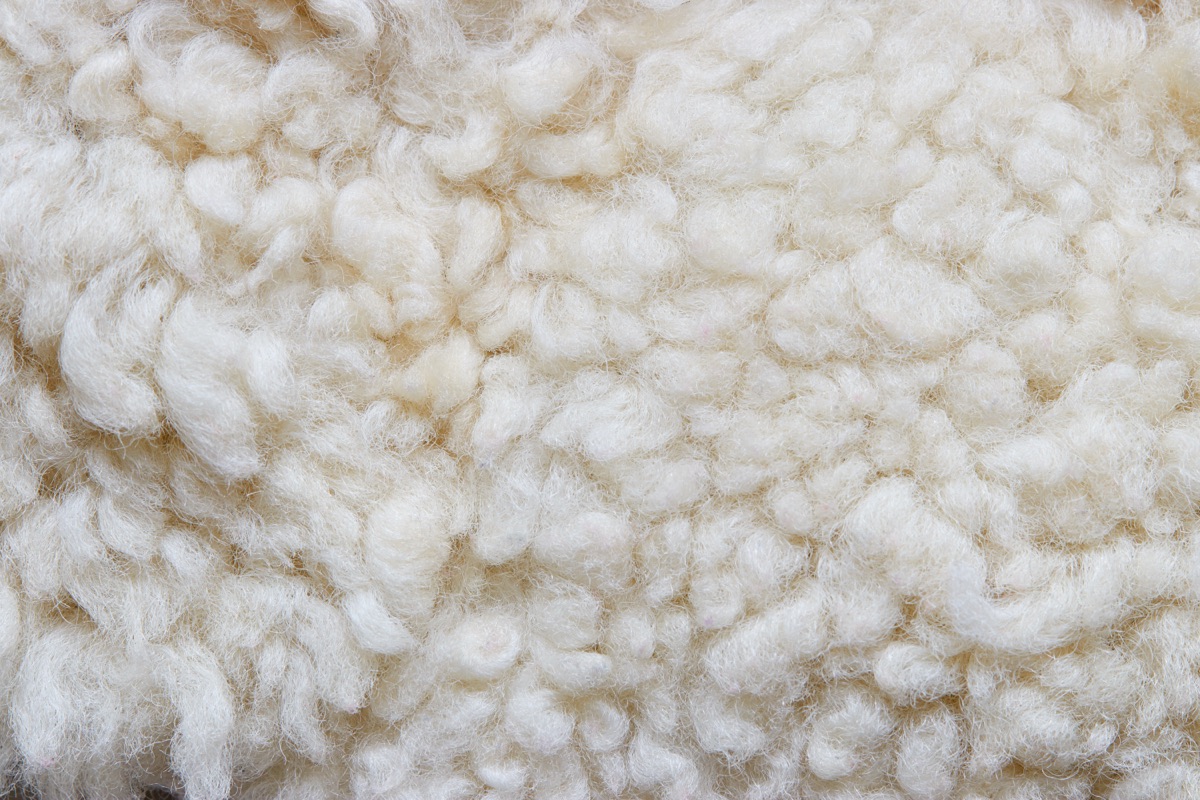
That harder life produces a fleece with more crimp, and crimp is where insulation actually comes from.
Sheep are not native to the Andes. They arrived with the Spanish in the sixteenth century and were pushed up into country no European flock had ever faced: thin air, hard frost, and pasture that disappears for months.
Five centuries of that produced a different animal from the one that landed. The flocks that survive at altitude carry heavier, denser fleece than lowland sheep, because anything lighter did not last a winter up there.
The flocks graze the same high pasture as the alpacas and are handled the same way, outdoors and by hand. Nothing about the process is industrial until the fiber reaches the mill.
Wool absorbs close to a third of its own weight in moisture before it feels damp to the touch. In a bedroom that means it takes the humidity of the night away from the sleeper instead of trapping it.
Wool does not carry a flame the way cotton or synthetics do. It chars and stops. No treatment is applied to achieve that, which matters for anyone selling into markets with strict bedding regulations.
Each fiber works like a spring. A wool topper compressed under a body all night recovers during the day, and that is why it keeps its loft for years instead of flattening into a pad.
No breeding programme designed these flocks. The climate did the selecting, generation after generation, and what came out the other side is a fleece adapted to conditions that would kill a lowland animal.
Blends with alpaca to add body and structure, and with cotton for lighter bedding.